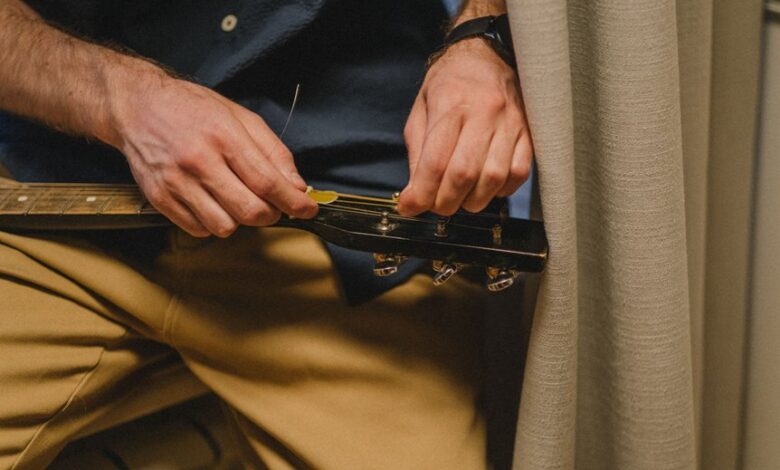
Restringing a guitar incurs costs that vary by instrument type, string choice, and service scope. Electric and acoustic guitars differ in string sets and nut considerations, altering labor time and pricing. Material costs range roughly from $15 to $40 for strings, with labor often adding $20 to $60 depending on neck setup and calibration needs. Hidden fees may appear for specialized tools or neck relief checks, prompting a careful assessment of what is included. The implications become clear as one weighs options and trade-offs.
What Influences Restringing Costs (Electric vs Acoustic)
Restringing costs differ primarily between electric and acoustic guitars due to hardware, string material, and setup requirements. The assessment compares instrument architecture, nut and bridge complexities, and post-restring adjustments. Occurrence of occasion pricing reflects service context and turnover, while material quality informs longevity and tone preservation. Typical electric scenarios emphasize flexibility; acoustics prioritize tension management and resonance, yielding differentiated, predictable budgeting for technicians.
How Much Do Strings Itself Cost by Type and Brand
String cost varies materially by type and brand, reflecting material composition, winding method, and intended tension. The analysis compares core materials, alloys, and winding density, with pricing tied to string gauge and coating options. Higher gauges and premium coatings incur greater per-set costs, while nickel and phosphor bronze ensembles show distinct market segments. Brand perception also influences price differentials.
Hidden Fees: Tools, Setups, and Optional Services
Hidden fees associated with restringing extend beyond the price of strings themselves to include tools, setups, and optional services. The evaluation considers restringing materials, calibration, nut height checks, and neck relief notes. Service timing influences labor classification and scheduling windows. Accurate cost accounting requires documenting required ancillary work, preventing overruns. This approach preserves tone, setup consistency, and instrument stability across configurations.


Smart Ways to Save Without Compromising Tone
Smart budgeting for restringing focuses on optimizing material choices, labor efficiency, and service scope to preserve tonal integrity.
Techniques emphasize consistent winding, neck relief checks, and stage-ready setups within budget.
Restringing psychology informs client expectations, balancing cost vs. benefit.
Tone budgeting compares string brands and cores, selecting gauges that maintain sustain.
Precision scheduling minimizes repeat visits, ensuring reliable, economical tonal results.
Frequently Asked Questions
Do Restringing Costs Vary by Guitar Scale Length or Nut Width?
Restringing costs do not significantly depend on guitar scale length or nut width; price factors hinge on string type, installation time, and setup. Frequency of restring vs set replacement informs scheduling, with left handed restring pricing differences arising from supplier parity and demand.
How Often Should Beginners Restring Versus Replacing Whole Set?
Beginners restringing is recommended every 1–3 months with playing frequency; string replacement should occur when tone or intonation degrades. Restringing preserves setup, while full sets offer consistent tension. Freedom-minded players prefer routine maintenance and consistent practice.
Do Left-Handed Guitars Incur Different Restringing Charges?
Left handed stringing incurs pricing nuances due to hardware and gauge differences; restringing differences exist for tension and nut/slotted bridge alignment. Left handed guitars may cost slightly more, reflecting setup complexity and specialized components, yet outcomes remain functionally equivalent for players seeking freedom.
Are There Regional Price Differences for Professional Restringing?
Regional pricing varies for professional restringing, reflecting labor, materials, and local demand; regional pricing is inconsistent, influenced by shop specialization and geographic cost structures, yet professional restringing remains a stable reference point for budget-conscious players seeking quality.
Can Nail or Finger Care Affect String Longevity and Cost?
Nail or finger care marginally affects string longevity and cost, depending on hand hygiene and sweat composition. Care tips emphasize cleanliness and consistency; material focus centers on string type, winding tension, and fretboard conditioning to optimize performance and durability.
Conclusion
Restringing costs balance material price and technician effort. On one side, affordable string sets and routine labor keep totals modest; on the other, premium brands, detailed setups, and neck relief checks push prices upward. The methodical process—removal, winding consistency, tensioning, intonation, and nut/saddle calibration—grounds the bill in precision rather than guesswork. Juxtaposing simplicity with complexity, the guitar is at once a low-cost maintenance task and a platform for nuanced tonal stewardship, demanding measured care to preserve intonation and sustain.