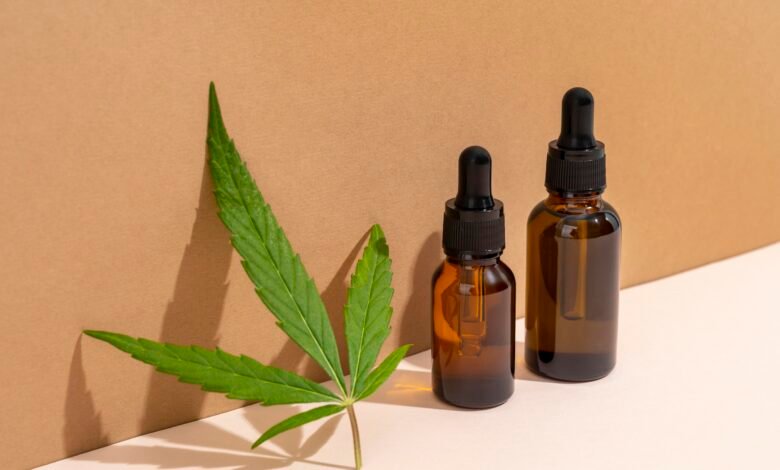
Two bottles labelled “CBD oil” can contain quite different ingredients. One may use an extract containing several compounds from the hemp plant; another may contain CBD that has been separated from most other plant compounds and added to a carrier oil. Even products with the same stated amount of CBD can differ in flavour, formulation and the presence of other cannabinoids. Understanding what goes into the bottle gives you a more useful starting point than the product name alone.
Why “CBD Oil” Is Not a Single, Fixed Formula
CBD, short for cannabidiol, is a cannabinoid found in cannabis and hemp plants. To make an oil for consumers, a manufacturer obtains CBD-containing material, processes it and formulates the resulting ingredient into a finished product. Those steps matter: the plant material used and the way it is extracted can affect which other compounds remain alongside CBD. The UK government’s guidance on cannabidiol notes that CBD can be selectively extracted from different parts of the plant and that some processes can alter other chemical constituents.
The word “oil” also tells you less than you might think. A bottle generally contains a CBD ingredient mixed with a carrier oil, but the carrier oil and any added flavourings form part of the finished recipe too. Looking at a range of CBD Oil products from Bristol CBD, for example, reveals different extract types under the same broad product description. The useful question is therefore not simply whether a bottle contains CBD, but what form of CBD it contains and what else is present.
Full-Spectrum, Broad-Spectrum and Isolate Explained
“Full-spectrum” usually describes an extract that retains a range of compounds from the plant, including CBD, other cannabinoids and potentially terpenes and flavonoids. It may also contain small amounts of THC, the cannabinoid associated with cannabis intoxication. Full-spectrum does not mean that every compound originally present in the plant survives processing, or that every full-spectrum oil has the same profile. The term identifies a general approach to the extract, not a standardised recipe.


“Broad-spectrum” commonly refers to an extract that retains multiple plant compounds but has undergone further processing intended to remove THC. Because removal and measurement have practical limits, a “THC-free” description is best read alongside a relevant batch test rather than treated as proof of absolute zero. CBD isolate takes a different route: CBD is separated from the accompanying plant compounds and can then be mixed into a carrier oil. An isolate-based oil can still contain other ingredients added during formulation, even though its CBD ingredient is isolated.
These extract types illustrate the distinction without making one type the default choice. The terms describe general approaches to formulation, not the contents of any particular brand’s range. If you are comparing bottles, first identify which of these extract types each product uses; then check the ingredient list and cannabinoid information for the particular oil. A spectrum term can narrow the possibilities, but it cannot tell you the measured composition of an individual batch.
Cannabinoids, Terpenes and the Entourage Effect
CBD and THC are cannabinoids, a group of compounds found in the cannabis plant. On a product label or laboratory report, you may see other cannabinoids listed alongside them, sometimes by abbreviated names. Their presence and measured amounts help describe the extract more precisely than “hemp oil” or “plant-based” does. A bottle made with CBD isolate, for instance, has a different cannabinoid profile from one made with an extract that retains several cannabinoids, even if both display the same headline CBD amount.
Terpenes are another group of plant compounds. They contribute to aroma and flavour, and processing can influence how much of a plant’s original terpene profile remains in an extract. This is one reason two oils may taste different without either taste revealing their CBD concentration. Flavonoids may also be discussed as part of a plant extract, although a product’s ingredient list alone will not quantify all of these compounds.
You may hear the phrase “entourage effect” used to describe a proposed interaction among cannabinoids and other plant constituents. It is a way of discussing the mixture, not evidence that a particular bottle will deliver a specific health outcome. The practical value of knowing these terms is simpler: they help you distinguish an extract containing several plant compounds from isolated CBD, and they prompt you to check whether a product’s detailed information supports its description.
What Independent Lab Testing Can—and Cannot—Tell You
A laboratory report, often called a certificate of analysis, can give a more specific account of a tested sample than a spectrum label can. A cannabinoid analysis may show the measured CBD content and whether particular other cannabinoids, including THC, were detected. Depending on the tests commissioned, a report may also cover other aspects of composition. The important detail is scope: a report speaks to the sample tested and the substances and measurement limits named in that report, not to every possible constituent of every bottle.
Measurement becomes particularly demanding when a laboratory is looking for very small amounts of controlled cannabinoids. UK Home Office guidance on CBD products, drawing on the work of the Advisory Council on the Misuse of Drugs, emphasises suitably accredited testing with appropriate sensitivity. ISO/IEC 17025 accreditation is an important laboratory quality marker, but it is still worth checking which methods and substances a particular result covers. “Not detected” means a substance was not found above the method’s stated detection limit; it does not mean that its absolute absence has been demonstrated.
Bristol CBD makes third-party lab testing part of its product information. For a buyer, the benefit of an independent result is the opportunity to compare a product description with measured data, particularly when choosing between extract types. Check that the report relates to the product and, where batch information is available, to the batch being considered. A test is most useful when you can read its date, the laboratory’s name, the substances assessed and the units used for the results.
A Practical Label Check Before You Buy
You do not need to memorise every cannabinoid abbreviation to make sense of a bottle. Start with the information that identifies the recipe, then move to the details that help verify its claims. These checks keep the focus on the product in front of you rather than on broad promises attached to CBD as a category:
- Extract type: Look for full-spectrum, broad-spectrum or isolate, and read any accompanying description of the extract rather than relying on the term alone.
- CBD quantity: Note whether the stated amount refers to the whole bottle or another measure, and compare like with like when looking at different bottle sizes.
- Other ingredients: Identify the carrier oil and check for flavourings or other additions that form part of the finished product.
- Batch information: Look for a batch identifier and a corresponding laboratory report showing the test date, laboratory, cannabinoids measured and relevant detection limits.
- THC information: Read any THC claim alongside the applicable test result, especially if the product is described as broad-spectrum or THC-free.
These details work best together. A label may identify an oil as full-spectrum, while its ingredient list tells you what carries the extract and its batch report gives measured cannabinoid results. Conversely, a prominent CBD figure does not explain the rest of the formulation. Before choosing an oil, compare the product description, ingredients and relevant laboratory analysis as parts of the same picture: what is in the bottle matters more than the category name printed on its front.