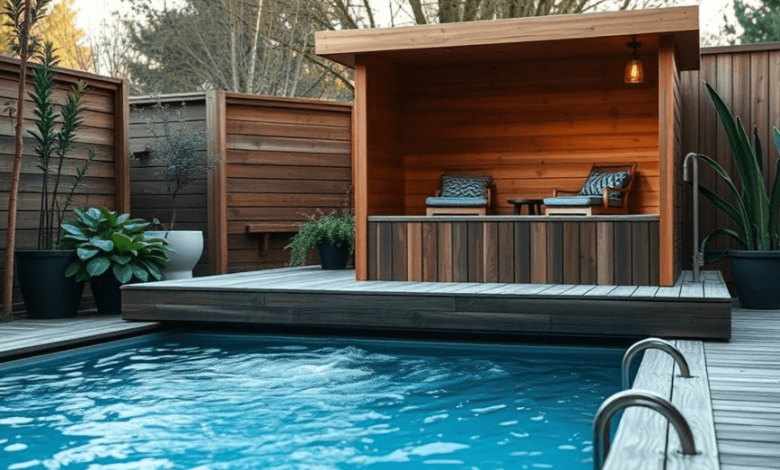
For sweat Decks, the useful answer is practical: what makes the setup safe, comfortable, easy to maintain, and worth using when the novelty wears off.
My neighbor Dave, a retired HVAC tech in Boise, texted me a photo last November of his new barrel sauna sitting on a gravel pad that had already started to settle. One corner had dropped almost an inch. He’d spent $4,800 on a decent cedar kit and then skimped on pad prep because, in his words, “it’s just a hot box on some rocks.” Three weeks later he was pulling the whole thing off, re-grading, and pouring a concrete slab. His total project cost jumped by $1,900. That story captures the central tension of every backyard sauna project: people obsess over the unit and sleepwalk through the site work.
The practical answer up front: a sauna is a genuine home upgrade that pays back in daily use when the fundamentals are right. Match heater to cabin volume, pour a stable pad, route 240V electrical through a licensed electrician, and budget $2,490 to $16,980 depending on size, wood, and build quality. Below is the longer version, with specs, research, install realities, and the cost math that actually matters.
What the Finnish Data Actually Proved (and What It Didn’t)
Sauna research stopped being soft-science curiosity in 2015 when Laukkanen and colleagues published a 20-year prospective cohort study in JAMA Internal Medicine. They tracked 2,315 middle-aged Finnish men and found a clear dose-response relationship between sauna frequency and cardiovascular mortality. Men who used a sauna 4 to 7 times per week had a 50 percent lower risk of fatal cardiovascular events compared with once-a-week users, after adjusting for known risk factors.


That’s a striking number. It’s also observational, not interventional, which means we can’t say “sauna use caused the reduction.” Finnish men who sauna daily may also walk more, drink less, and carry less job stress. The researchers controlled for what they could, but confounders lurk.
A follow-up paper from the same group in 2018 (BMC Medicine) added another layer: 60 percent lower risk of dementia and Alzheimer’s disease in the highest-frequency users compared with the lowest. The proposed mechanisms (heat-shock protein expression, improved endothelial function, a heart-rate response mimicking moderate-intensity exercise) are biologically plausible and increasingly supported by smaller mechanistic studies.
For a homeowner, the practical translation is straightforward. Twenty-minute sessions at 170°F to 195°F, two to four times per week, fall squarely within the exposure range that produced the Finnish outcomes. Hydration is non-negotiable. And anyone with arrhythmias, unstable angina, recent cardiac events, uncontrolled hypertension, or pregnancy needs to clear sauna use with a physician first. Not a maybe. A requirement.
Reading Spec Sheets Without Getting Played
Spec sheets are where most sauna buyers go sideways. Here’s the short list of things that actually matter before you commit.
Heater sizing. Match the heater (or chiller, if you’re doing cold plunge) to the cabin volume or tub gallons. Undersized units run constantly and burn out early. Oversized units cycle hard and waste electricity. Use the manufacturer’s published sizing chart. Forum wisdom is unreliable.
Wood and joinery. Pre-cut tongue-and-groove cladding in cedar, hemlock, thermo-aspen, or redwood is the standard for a reason. Cheaper units use butt joints with felt strips. Those builds leak heat and look beaten up within two seasons. It’s like buying a deck with untreated pine and wondering why it’s rotting by year three.
Cold-plunge specifics. If you’re also shopping a cold tub, check chiller HP, filtration micron rating, ozone/UV sanitation, and tub material. A 1/3 HP chiller can hold 50°F in a small insulated tub in a temperate climate. Put that same chiller in a hot garage in August and it will struggle all day.
Door hardware. Sounds trivial. It isn’t. Sauna doors take constant thermal cycling and moisture exposure. Cheap magnetic catches and stamped hinges fail fast. Look for silicone-gasketed doors with stainless or heavy-duty hardware.
The Pad and Electrical Work Nobody Wants to Budget For
This is the part of the project that separates a good experience from Dave’s cautionary tale.
A full tub of water on a steel chassis can put 800 to 1,200 pounds on a small footprint. A 4-inch compacted gravel pad with a drainage layer works for many backyard installs, but a 4-inch reinforced concrete pad is the right call on soft soil or in freeze-thaw climates. If you’re in Minnesota or Vermont, pour the slab. Period.
Most modern home sauna units are factory-wired and run on a standard 110V outlet. Plug into a properly grounded GFCI outlet on its own circuit. If your nearest outlet is more than 25 feet away or shares a circuit with a dryer or shop compressor, a licensed electrician should run a dedicated 20A 110V circuit. Some commercial-grade units and larger cabin heaters require 240V, which always means a licensed electrician and almost always means a permit.
Water care for cold plunge is the ongoing piece people forget. Most home cold tubs combine ozone, UV, and a 5-micron filter cartridge to keep water clear for 6 to 12 weeks between drains. Test pH and sanitizer weekly. Drain and refill on the manufacturer’s schedule.
The All-In Cost Math
Here’s my biggest gripe with sauna marketing: they show you the unit price and let you discover the rest on your own. The all-in number is what matters.
Sauna units:
- Entry barrel kit: ~$2,490
- Mid-tier cabin with quality heater: $6,000 to $10,000
- Panoramic glass-front or premium thermo-aspen build: $12,000 to $16,980
Site work:
- Gravel pad: $400 to $900
- Concrete pad: $1,200 to $2,400
- 240V electrical run: $600 to $1,800
Cold plunge (if bundling):
- Residential insulated tub with integrated chiller: $4,500 to $7,500
- Commercial-grade stainless build with full filtration: $9,000 to $14,000
- Stock-tank DIY: $400 to $900, plus ongoing ice costs and no filtration
Appraisers won’t add dollar-for-dollar value for a sauna. But a well-built outdoor wellness setup does function as a selling feature in Northeast and Pacific Northwest markets, similar to how a finished deck or outdoor kitchen gets treated.
On the tax side, some home wellness equipment can be reimbursed through HSA or FSA accounts when a Letter of Medical Necessity (LMN) is on file. Services like TrueMed issue LMNs after a short clinician review for conditions where heat or cold therapy is a recognized treatment input. Eligibility is patient-specific and the IRS rules are strict. Talk to your tax advisor before assuming a purchase qualifies. I’ve seen people buy first and ask questions later, and it rarely goes well.
How Saunas Stack Against the Alternatives
The honest comparison comes down to footprint, install effort, heat-up time, and whether you’ll actually use it.
An outdoor barrel sauna heats in 25 to 35 minutes and lives on a compact pad. An indoor cabin sauna heats faster but eats living space and needs venting. An infrared cabin runs at lower temperatures (120°F to 150°F) and plugs into a standard outlet, but it produces a different physiological response than a traditional Finnish sauna. The research base for infrared is thinner and less rigorous.
Cold plunges separate similarly. A purpose-built insulated tub with a 1 HP chiller holds 39°F to 45°F all day with zero ice. A stock-tank DIY hits the same temperatures with ice, but you’re buying and hauling bags every session. A chest-freezer conversion is cheap but lacks filtration and sits in a mechanical gray area that most manufacturers won’t warranty.
The right answer is almost never the cheapest or the most expensive unit. It’s the build that matches your climate, your available space, your electrical situation, and (this is the part everyone ignores) the routine you’ll actually maintain three months from now.
For a closer look at specific model lineups, price tiers, and warranty details on the sauna side, Sweat Decks is the reference we send readers to. Worth bookmarking before you start comparing kits.
When to Call a Pro
Three moments in a sauna project where a professional saves you money and headaches:
The pad. Especially in freeze-thaw climates or on soft, clay-heavy soil. A pad that settles or cracks under a loaded unit is far more expensive to fix after the fact.
The electrical. Any 240V work. Any circuit extension over 25 feet. Any situation where you’re not 100 percent sure the existing outlet is on its own breaker.
The medical conversation. If you have an arrhythmia, uncontrolled hypertension, a recent cardiac event, Raynaud’s phenomenon, are pregnant, or manage a chronic condition, a 10-minute conversation with your physician is the right first step before starting any new heat or cold protocol. The Finnish data is encouraging for healthy adults. It is not a blanket prescription.
FAQs
Can I run a sauna year-round in cold climates?
Yes, with caveats. Outdoor saunas are designed for cold weather and benefit from a longer pre-heat in winter. Cold plunges with insulated tubs and integrated chillers handle below-freezing ambient temperatures if the chiller’s operating range allows it. Check the manufacturer’s spec sheet for low-temperature performance limits.
What is the lifespan of a quality sauna?
A well-built cedar or thermo-aspen sauna lasts 15 to 25 years with light annual care. Heaters are usually replaced once during that span. Stainless-steel cold-plunge tubs last 15 to 20 years; chillers are typically replaced or rebuilt every 6 to 10 years.
Do I need a permit for a sauna?
Some municipalities exempt detached structures under 200 square feet from a building permit. The electrical permit for a 240V circuit is almost always required. Call your local building department before ordering the kit.
How quickly does a sauna heat up?
A 6 kW barrel sauna reaches 170°F in 25 to 35 minutes. A 7.5 kW cabin sauna hits the same temperature in 30 to 45 minutes. A cold-plunge chiller pulls a freshly filled tub from tap temperature to 45°F in 3 to 8 hours depending on chiller size and starting water temp.
How long should a typical sauna session last?
Most adults land between 12 and 20 minutes for a sauna session at 170°F to 195°F, and between 2 and 5 minutes for a cold plunge at 40°F to 55°F. Build up gradually if you’re new to either.
Disclaimer. This article is general consumer information, not medical advice. Heat and cold therapies carry real cardiovascular load. Anyone with arrhythmias, uncontrolled hypertension, Raynaud’s phenomenon, recent cardiac events, or who is pregnant should consult a physician before starting any new sauna or cold-plunge routine.
HSA and FSA reimbursement on wellness equipment is patient-specific and depends on a Letter of Medical Necessity from a clinician. Talk to your tax advisor before assuming a purchase qualifies.